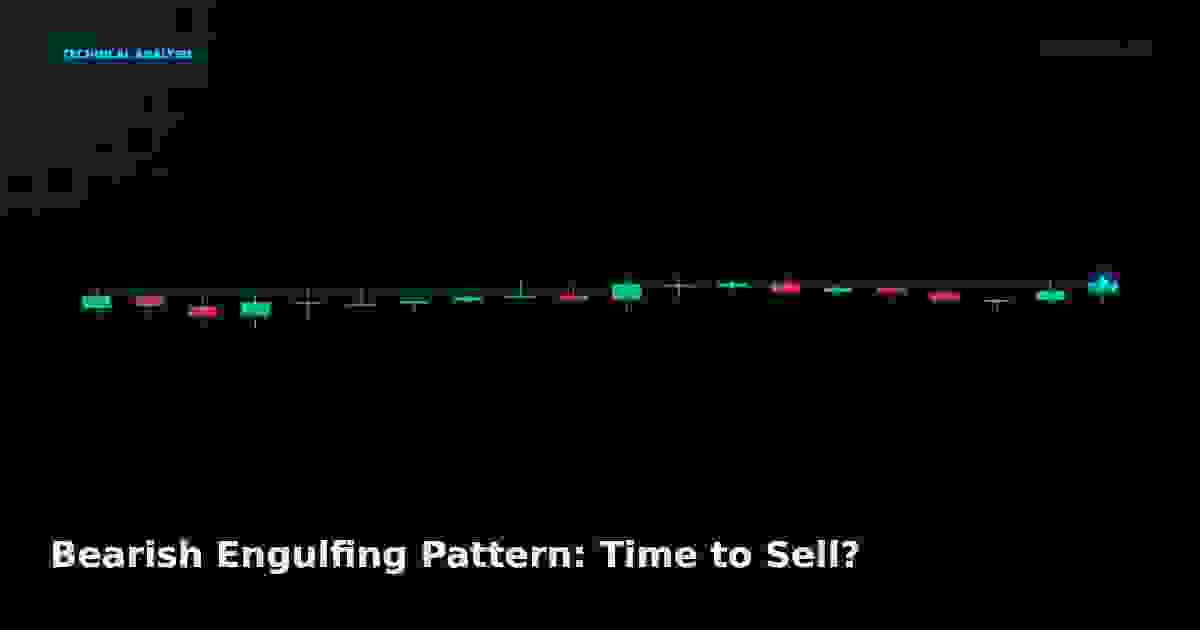
Bearish Engulfing Pattern: Time to Sell?
The bearish engulfing pattern is a two-candle formation that signals a potential bearish reversal after an uptrend.
What Is a Bearish Engulfing Pattern?
The bearish engulfing pattern is a two-candle reversal formation that appears at the top of an uptrend. The second candle's body completely engulfs the first candle's body, signaling a sudden shift in momentum from buyers to sellers. It's the bearish counterpart to the bullish engulfing pattern and is equally reliable.
What the Pattern Looks Like
The pattern consists of two candles:
- First candle: A small bullish (green) candle consistent with the existing uptrend
- Second candle: A large bearish (red) candle whose body fully covers the first candle's body
The second candle opens higher than the first candle's close and closes below the first candle's open. A larger second candle relative to the first produces a stronger reversal signal.
What It Signals
The bearish engulfing pattern signals a decisive shift in control from buyers to sellers. After a sustained rally, sellers step in aggressively and overwhelm the buyers, often marking an important top.
| Signal Strength | Condition |
|---|---|
| Strong | Large engulfing candle on high volume |
| Moderate | Average candle size with normal volume |
| Weak | Small engulfing candle on low volume |
How to Trade It
- Confirm the uptrend. The pattern is only meaningful after an extended advance.
- Enter on confirmation. Some traders short on the close of the engulfing candle; others wait for the next candle to break below the engulfing candle's low.
- Place your stop-loss above the high of the engulfing candle.
- Set profit targets at recent support levels or use a trailing stop.
Trading Example
A stock has rallied from $30 to $48 over a month. On day 31, a small green candle closes at $48.20. The next day, price gaps up to $48.80, then sells off sharply to close at $46.50 — completely engulfing the previous candle. Traders may enter short with a stop above $48.80.
Common Mistakes
- Shorting in strong uptrends without waiting for clear confirmation
- Ignoring overhead resistance, which strengthens the bearish case
- Holding shorts through obvious support without scaling out
When to Be Cautious
The bearish engulfing pattern is less reliable in thin, low-volume markets or when the broader trend is strongly bullish. Always weigh the signal against higher-timeframe context before acting.
The bearish engulfing pattern is a favorite among swing traders because it offers clear entry points, defined risk levels, and favorable reward-to-risk ratios when traded at major resistance.
Live Chart
Open full chart →Related market data, powered by TradingView.
My Notes
Log in to save notes on this article and share them with the community.
Related
Read next
Trendline Drawing Standardization: Touch Points, Angle, and Confirmation
Standardized rules for drawing trendlines — touch point selection, ideal angle bands, minimum touches, breakout confirmation, and common curve-fitting errors to avoid.
Read more →Smart Recommendations