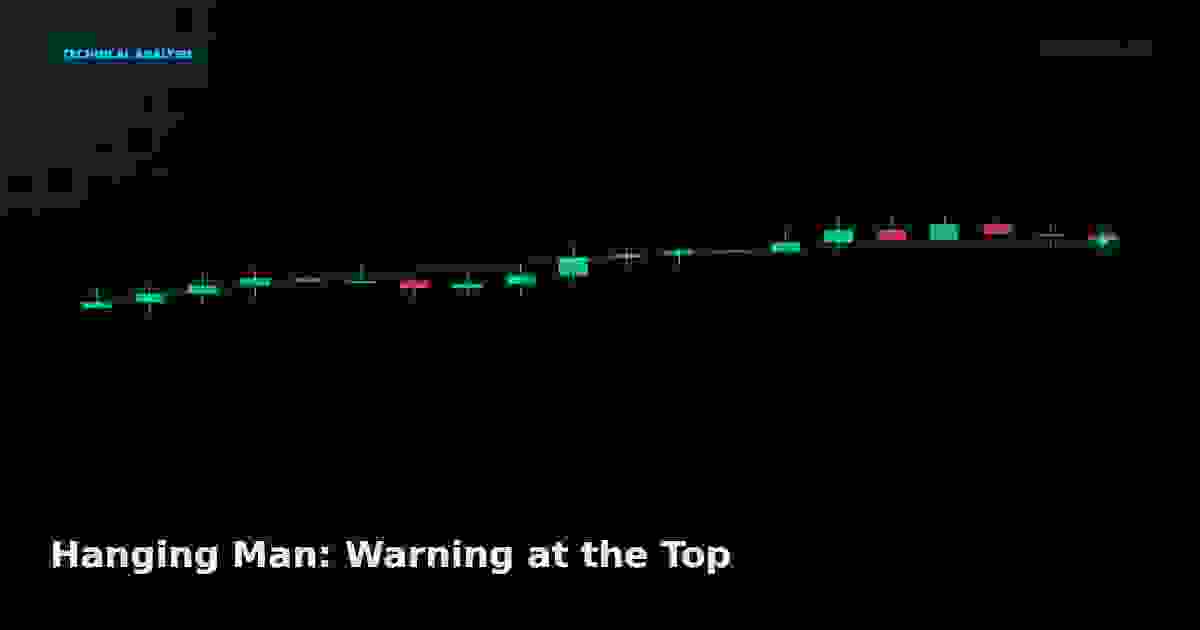
Hanging Man: Warning at the Top
The hanging man is a bearish reversal candlestick that forms after an uptrend and warns of a potential top.
What Is a Hanging Man?
The hanging man is a bearish reversal candlestick pattern that forms after an uptrend. Visually, it's identical to the hammer, but the context is the opposite — while the hammer forms after a downtrend and is bullish, the hanging man forms after an uptrend and is bearish. The name comes from its resemblance to a hanging stick figure.
What the Pattern Looks Like
The hanging man has three defining characteristics:
- A small real body at the top of the trading range
- A long lower shadow at least twice the length of the body
- Little to no upper shadow
The body can be green or red, though a red body is considered slightly stronger because it shows sellers won the session. The key feature is the long lower wick, showing that sellers pushed price down intraday before buyers recovered it.
What It Signals
The hanging man signals that selling pressure emerged during the session. Even though buyers recovered by the close, the long lower wick indicates that sellers tested lower prices successfully. After an uptrend, this warns that buyers may be losing control.
The hanging man is a warning, not a confirmation. It shows selling pressure exists, but the next candle must prove the reversal.
How to Trade It
- Confirm the uptrend. The pattern only matters after an established advance. In a downtrend, the same shape is a bullish hammer.
- Wait for confirmation. Enter only after a bearish candle closes below the hanging man's low.
- Place your stop-loss above the hanging man's high.
- Target recent support. Aim for the most recent swing low.
Comparison: Hanging Man vs. Hammer
| Feature | Hanging Man | Hammer |
|---|---|---|
| Trend context | After uptrend | After downtrend |
| Signal type | Bearish reversal | Bullish reversal |
| Shape | Same | Same |
The shape is identical, but the context determines whether the pattern is bearish (hanging man) or bullish (hammer). This is why trend context is more important than candlestick shape alone.
Trading Example
A stock has rallied from $25 to $38 over a month. On day 31, price opens at $38.20, drops to $36 intraday, then closes back at $38.10 — forming a hanging man. The next day, a strong red candle closes at $36.50. This confirmation gives traders a reason to enter short with a stop above $38.20.
Common Mistakes
- Treating it as a standalone sell signal
- Confusing it with the bullish hammer in downtrends
- Entering before confirmation
The hanging man works best when combined with overhead resistance, overbought indicators, or other bearish reversal patterns to build a stronger case for a short entry.
Live Chart
Open full chart →Related market data, powered by TradingView.
My Notes
Log in to save notes on this article and share them with the community.
Related
Read next
Trendline Drawing Standardization: Touch Points, Angle, and Confirmation
Standardized rules for drawing trendlines — touch point selection, ideal angle bands, minimum touches, breakout confirmation, and common curve-fitting errors to avoid.
Read more →Smart Recommendations