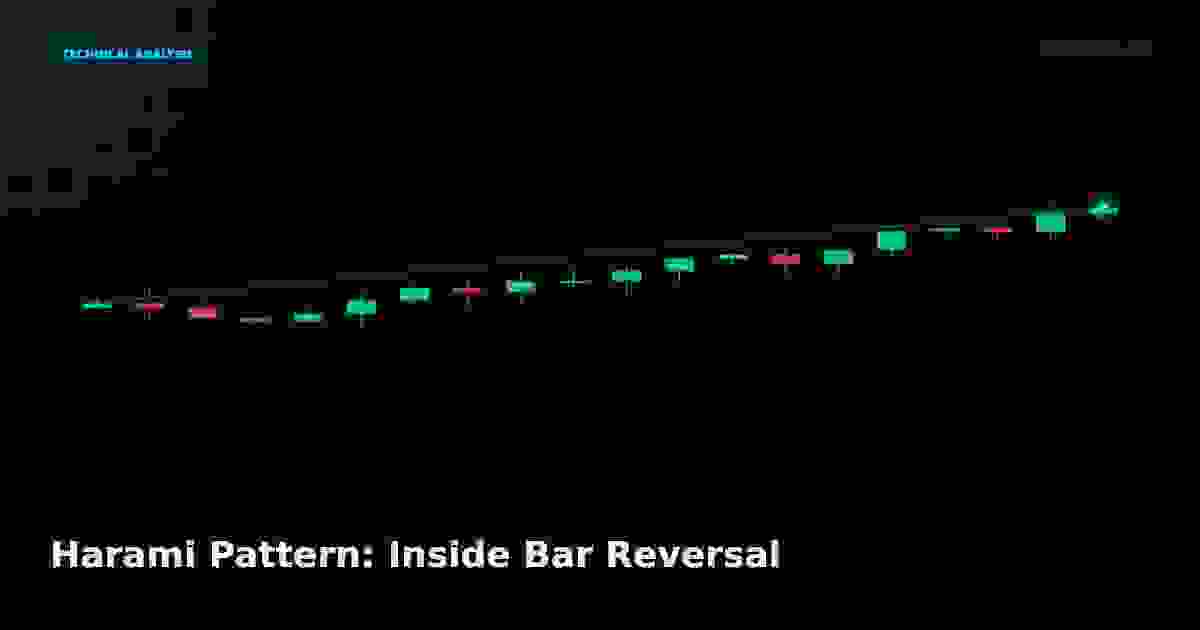
Harami Pattern: Inside Bar Reversal
The harami is a two-candle reversal pattern where a small candle forms inside the body of a larger previous candle.
What Is the Harami Pattern?
The harami is a two-candle reversal pattern whose name means "pregnant" in Japanese — the first candle is the "mother" and the second is the "baby" nestled inside its body. The pattern signals a sudden loss of momentum after a strong move. There are both bullish and bearish variations of the harami.
What the Pattern Looks Like
The harami consists of two candles:
- First candle: A long candle (bullish or bearish) in line with the existing trend
- Second candle: A small candle whose body fits entirely within the first candle's body
For a bullish harami (after a downtrend), the first candle is bearish and the second is bullish. For a bearish harami (after an uptrend), the first candle is bullish and the second is bearish. The second candle's color is less important than its small size and position inside the first candle's body.
What It Signals
The harami signals a sudden pause in momentum. After a strong directional move, the small second candle shows that buyers and sellers have reached a temporary equilibrium. This often precedes a reversal or a period of consolidation.
| Variation | Context | Signal |
|---|---|---|
| Bullish harami | After downtrend | Potential reversal up |
| Bearish harami | After uptrend | Potential reversal down |
How to Trade It
- Verify the trend. The pattern requires a preceding move to be valid.
- Wait for confirmation. The harami is a warning, not a strong signal. Enter only after a confirming candle breaks in the expected direction.
- Place your stop-loss beyond the opposite side of the pattern — below the first candle's low for bullish setups, above the first candle's high for bearish setups.
- Target recent swing levels. Aim for the most recent swing high (bullish) or swing low (bearish).
Trading Example
A stock falls from $50 to $42 over two weeks. On day 15, a long red candle opens at $42.50 and closes at $41. Day 16 opens at $41.20 and closes at $41.80 — a small green candle entirely inside day 15's body. This is a bullish harami. If day 17 closes above $42, traders may enter long with a stop below $41.
Common Mistakes
- Treating the harami as a standalone reversal signal
- Ignoring the size of the second candle — it should be much smaller than the first
- Entering before confirmation arrives
Harami Cross
A special variation called the harami cross forms when the second candle is a doji (no real body). This is considered a stronger reversal signal than a standard harami because it shows complete indecision.
The harami is best used as an early warning that momentum is fading, paired with support/resistance and other patterns for higher-probability setups.
Live Chart
Open full chart →Related market data, powered by TradingView.
My Notes
Log in to save notes on this article and share them with the community.
Related
Read next
Trendline Drawing Standardization: Touch Points, Angle, and Confirmation
Standardized rules for drawing trendlines — touch point selection, ideal angle bands, minimum touches, breakout confirmation, and common curve-fitting errors to avoid.
Read more →Smart Recommendations