Piercing Pattern: Bullish Reversal Signal
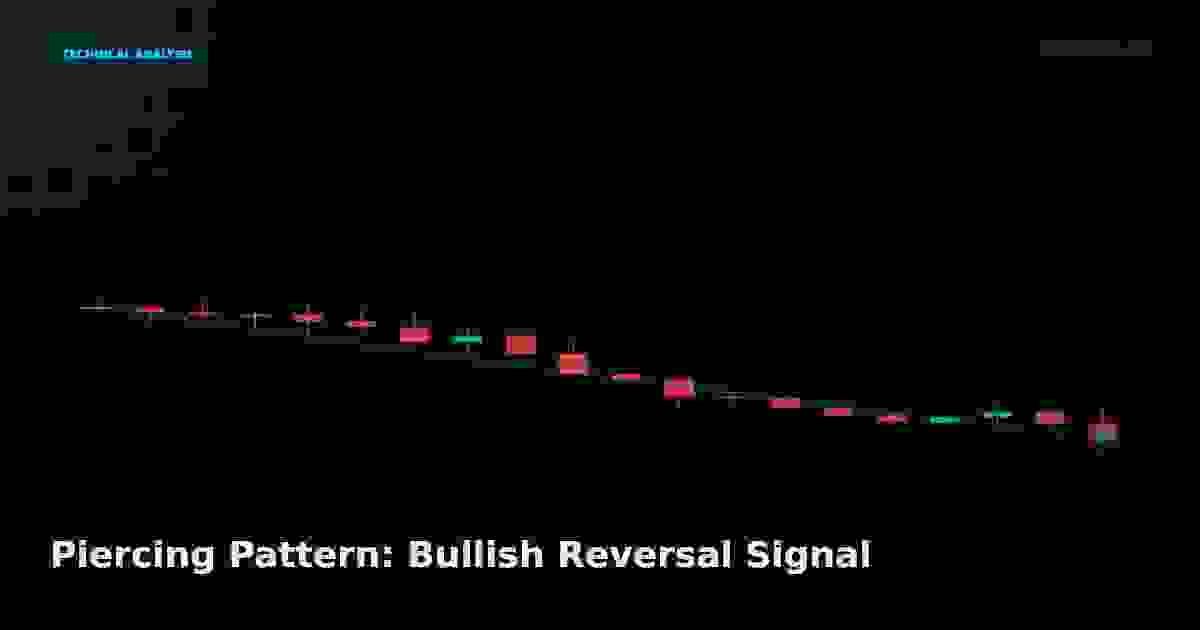
The piercing pattern is a two-candle bullish reversal formation that appears at the bottom of a downtrend.
What Is the Piercing Pattern?
The piercing pattern is a two-candle bullish reversal formation that appears at the bottom of a downtrend. It's related to the bullish engulfing pattern but is considered slightly weaker because the second candle doesn't fully engulf the first. The name comes from the way the second candle "pierces" the body of the first candle.
What the Pattern Looks Like
The piercing pattern consists of two candles:
- First candle: A long bearish (red) candle in line with the existing downtrend
- Second candle: A bullish (green) candle that opens below the first candle's low and closes above the midpoint of the first candle's body
The second candle should close at least halfway into the first candle's body. The deeper it pierces — ideally approaching the first candle's open — the stronger the reversal signal.
What It Signals
The piercing pattern signals that buyers stepped in aggressively after a period of selling. The gap down on the second candle shows selling continued initially, but the strong rally to close above the midpoint of the first candle's body indicates buyers are regaining control.
The closer the second candle's close is to the first candle's open, the stronger the bullish signal.
How to Trade It
- Verify the downtrend. The pattern requires a preceding decline to be valid.
- Enter on the second candle. Traders often enter when the second candle closes, ideally with strong volume.
- Place your stop-loss below the low of the second candle.
- Target recent resistance. Aim for the most recent swing high.
Comparison: Piercing vs. Bullish Engulfing
| Feature | Piercing Pattern | Bullish Engulfing |
|---|---|---|
| Second candle close | Above midpoint of first candle | Above first candle's open |
| Signal strength | Moderate | Strong |
| Body coverage | Partial | Full |
Trading Example
A stock falls from $50 to $42 over a month. On day 30, a long red candle opens at $42.50 and closes at $41. Day 31 opens at $40.50 (below the prior low), then rallies to close at $42 — above the midpoint of day 30's body. This is a textbook piercing pattern, and traders may enter long with a stop below $40.50.
Common Mistakes
- Trading the pattern without a prior downtrend
- Entering when the second candle barely pierces the first candle's body
- Ignoring volume, which validates buyer interest
The piercing pattern works best when combined with support levels, oversold indicators, or other bullish reversal patterns to confirm a potential bottom.
Live Chart
Open full chart →Related market data, powered by TradingView.
My Notes
Log in to save notes on this article and share them with the community.
Related
Read next
Trendline Drawing Standardization: Touch Points, Angle, and Confirmation
Standardized rules for drawing trendlines — touch point selection, ideal angle bands, minimum touches, breakout confirmation, and common curve-fitting errors to avoid.
Read more →Smart Recommendations