Forex Chart Types: Line, Bar, and Candlestick
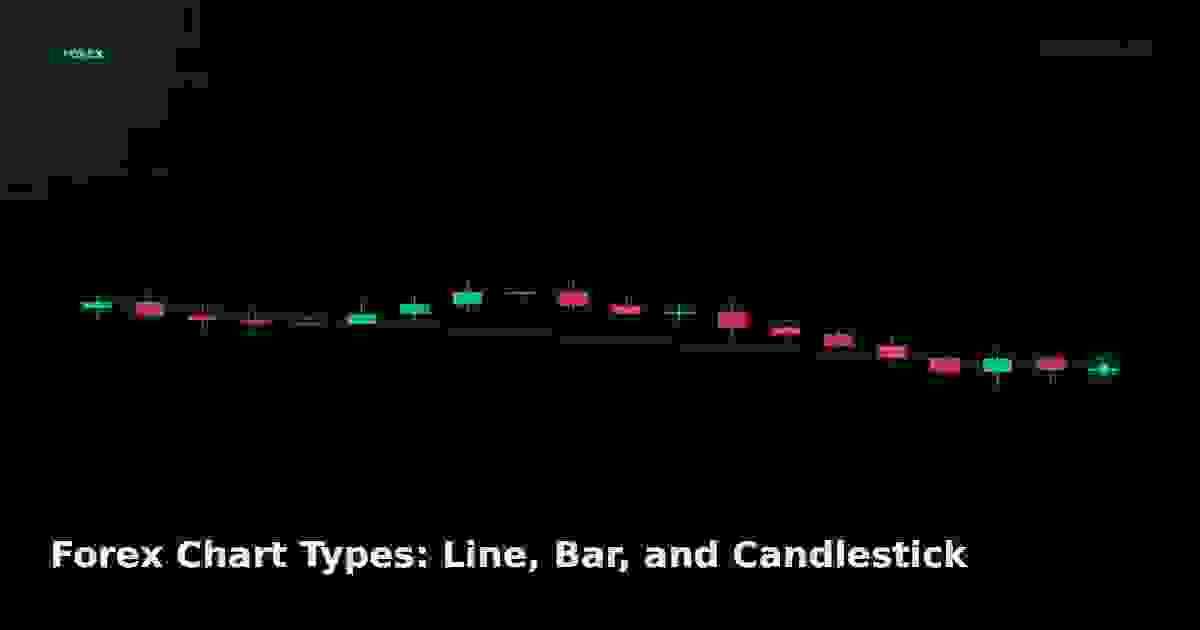
Line, bar, and candlestick charts each display price action differently, with candlesticks offering the most detail for traders.
Forex Chart Types: Line, Bar, and Candlestick
Charts are how traders see the market. Three chart types dominate forex: line, bar, and candlestick. Each presents price information differently, and choosing the right one improves your ability to read market structure and spot opportunities.
The Three Chart Types
| Chart Type | Shows | Best For |
|---|---|---|
| Line | Close prices only | Quick trend overview |
| Bar | Open, high, low, close (OHLC) | Detailed structure |
| Candlestick | OHLC with color | Pattern recognition |
Line Charts
A line chart connects closing prices with a single continuous line — the simplest chart type.
- Advantages: clean, uncluttered view of the trend; easy to spot support and resistance; reduces noise from intraday volatility
- Disadvantages: hides open, high, and low information; cannot show intraday volatility or wicks; limited for entry and exit timing
Best use: Identifying the broader trend at a glance, especially on higher timeframes.
Bar Charts (OHLC)
A bar chart shows the open, high, low, and close for each period as a vertical bar.
- Left horizontal tick marks the open
- Right horizontal tick marks the close
- Top of the vertical line is the high
- Bottom of the vertical line is the low
Bar charts show full price information and reveal volatility (the height of the bar), but they are visually busier and harder to read quickly than candlesticks.
Candlestick Charts
Candlesticks display the same OHLC data as bar charts but use a colored body that makes patterns visually distinct. This is the most popular chart type in forex.
Anatomy of a Candle
- Body — the rectangle between open and close
- Wick (shadow) — the thin lines above and below the body
- Bullish candle — closes higher than it opens (often green or white)
- Bearish candle — closes lower than it opens (often red or black)
Key Candlestick Patterns
| Pattern | Signal | Meaning |
|---|---|---|
| Doji | Indecision | Open and close nearly equal |
| Hammer | Potential reversal (bottom) | Long lower wick, small body |
| Shooting Star | Potential reversal (top) | Long upper wick, small body |
| Bullish Engulfing | Reversal up | Large bullish candle engulfs prior bearish |
| Bearish Engulfing | Reversal down | Large bearish candle engulfs prior bullish |
Candlesticks offer quick visual interpretation, a rich pattern library, and work across all timeframes — the industry standard for active trading.
Choosing the Right Timeframe
- 1-minute, 5-minute — scalping, fine entries
- 15-minute, 1-hour — day trading
- 4-hour, daily — swing trading
- Weekly, monthly — long-term trend analysis
A common approach: use a higher timeframe for trend direction and a lower timeframe for entries.
Practical Tips
- Start with candlesticks — the best balance of detail and readability
- Don't overload with indicators — the chart itself carries most information
- Use line charts for trend clarity on higher timeframes
- Combine multiple timeframes to confirm signals
Start with candlesticks, learn a handful of high-probability patterns, and let the chart tell you its story before adding indicators.
Live Chart
Open full chart →Related market data, powered by TradingView.
My Notes
Log in to save notes on this article and share them with the community.
Related
Foundations: Trading Basics
Start here. What trading actually is, how markets work, order types, and how to build your first plan.
strategyBollinger Band Strategy: Squeeze and Fade
A two-mode Bollinger Band strategy that trades the squeeze breakout and fades the band extremes inside ranges.
strategyBreakout Strategy: Catch the Move
A breakout strategy that enters when price escapes a consolidation range, aiming to capture the explosive move that follows.
Read next
Forex Swap and Carry Trade Mechanics
Master forex swap (rollover) mechanics and the carry trade so overnight financing works for you instead of silently eroding returns.
Read more →Smart Recommendations